What Did Investigators Actually Find About Havana Syndrome?
Affected personnel, clinicians, and investigators answered three different questions. The confusion starts when headlines collapse them into one.
The question behind most of the headlines is: was Havana syndrome caused by a directed-energy weapon? The best-supported answer, based on the official record to date, is more nuanced than either side of that debate suggests. Most investigated incidents were not determined to be hostile acts by any particular state. Some incidents showed evidence consistent with a single acoustic, or sound-based, source. The affected people’s symptoms are real and well documented, and researchers have proposed a plausible physical mechanism. What no published investigation has done is identify an actor, or explain every case with one cause.
That answer is not a non-answer. It is the precise state of the evidence, and understanding it requires separating the three questions that headlines routinely collapse into one.
Why Two Contradictory Headlines Can Both Be True
Consider two headlines you have both seen about the same set of incidents:
- “U.S. officials conclude the incidents were caused by a hostile weapon.”
- “U.S. intelligence finds most incidents were not attacks.”
Both can be true at once, because they are answering different questions at different levels of certainty. One describes a plausible mechanism for a subset of cases. The other describes attribution — whether a specific adversary carried out the incidents. A mechanism being judged plausible is a scientific claim about physics and biology. An attribution is an intelligence conclusion about actors and intent, and it requires a different and higher standard of evidence.
When a single word like “caused” bridges those two levels, the contradiction appears. The way out is to track the questions separately, which is exactly what the major reports do — and exactly what most coverage of them skips.
What Affected Personnel Reported
Reporting began in 2017 with U.S. diplomatic and intelligence personnel in Havana, Cuba, and it subsequently spread to personnel in other locations. The affected individuals described a range of symptoms, but the reviews found a consistent core cluster: a sudden onset of a sensation of pressure in the head or ears, often accompanied by auditory disturbances, dizziness, headache, and cognitive difficulties that could persist for days, weeks, or longer.
Two features of these reports matter for everything that followed. First, the symptoms began abruptly, which pointed investigators toward an event rather than a slowly developing condition. Second, the reports came from a defined population under government care, so the observations could be recorded, followed over time, and examined by independent reviewers rather than relying on anonymous anecdotes.
Treating these reports respectfully does not mean accepting every hypothesis about their cause. The patients experienced something real; the task of the investigations was to work out what it was, and how confident each conclusion could be.
What Clinicians and Researchers Found
On the clinical side, the most cited work came from the National Institutes of Health, published in Nature Medicine in 2021. The team examined a defined group of affected U.S. government employees and looked for physical evidence of the exposure that had been reported. They found histological changes in the inner ear of some of the individuals they examined — damage patterns consistent with acoustic exposure in a majority of the cases they assessed, and evidence consistent with a blast-type event in a smaller subset.
That is a significant and specific finding, but its scope is easy to overstate. The study addressed one question: could an acoustic mechanism produce the kind of injury consistent with these symptoms? The answer it gave was yes, plausibly, with physical evidence in the studied group. It did not address who or what exposed anyone, whether all affected people were exposed at all, or whether the exposure was deliberate. Those are the investigator’s questions, and the next section takes them up.
The Official Investigations, One by One
Four major products of the official record deserve individual attention, because each was asked a different question. Here is the timeline, followed by what each one can actually tell you.
2019 — congressional testimony on the pattern of incidents. After the reports spread, the director of central intelligence testified to Congress that the pattern of incidents was “consistent with some sort of directed energy weapon,” while the White House publicly pushed back on the weapon framing. That exchange, rather than any report, is what locked in the binary debate most people still have. Note what the testimony was: an intelligence assessment of a pattern, offered in a press-political setting, not a published study.
November 2020 — National Academies of Sciences, Engineering, and Medicine. The Academies were asked to assess the adverse health effects experienced by U.S. personnel in Cuba. Their report declined to name a single cause. It found the symptom clusters genuine and consistent, concluded that no existing data supported one definitive explanation, and specifically noted that noise or pressure-type exposures could not be ruled out as a mechanism. In plain terms: the symptoms are real, the cause is unknown, and the evidence does not yet settle the debate.
April 2021 — NIH, Nature Medicine. The acoustic study described above: a plausible mechanism, with biological evidence of acoustic-consistent injury in a studied group.
May 2022 — Office of the Director of National Intelligence. The ODNI report was explicitly an attribution review: it asked whether the incidents were the result of a hostile act by a particular state. Its conclusions, in plain terms: most of the reviewed incidents were not consistent with a hostile act by any particular state; a subset of incidents contained evidence consistent with a single acoustic source, which the report characterized in unflattering terms (the sound of a mosquito) for the affected personnel; and the government could not identify the actor behind the incidents. This is the report that most directly answers “who did this?” — with “we cannot say, for most of them.”
December 2023 — U.S. Government Accountability Office. The GAO report took a process view: it evaluated how the federal government had responded to the incidents and found significant gaps in data collection, coordination between agencies, and the consistency of reporting. Its value is procedural — it documents where the investigation machinery failed — rather than causal. It tells you how the government handled the problem, not what the problem is.
October 2024 — updated ODNI assessment. An updated declassified report continued the same line: no evidence that most of the reviewed incidents were hostile acts by a state, with a stated subset of incidents showing evidence consistent with a single acoustic source.
What each investigation can actually tell us
| Report | Question it was asked | What it can tell you | What it cannot tell you |
|---|---|---|---|
| National Academies (2020) | What do we know about the health effects experienced by U.S. personnel? | The symptom clusters are real and consistent; no single cause is established; a pressure or noise mechanism is not ruled out | The cause, or who is responsible |
| NIH, Nature Medicine (2021) | Is there a biologically plausible mechanism, with physical evidence? | Acoustic exposure is a plausible mechanism; studied individuals showed inner-ear evidence consistent with it | That all affected people were exposed; that any actor was involved |
| ODNI (2022, updated 2024) | Were the incidents hostile acts by a particular state? | Most incidents were not determined to be hostile acts by a state; a subset showed evidence consistent with a single acoustic source | What specifically happened in the incidents that were not attributed; the intent behind any of them |
| GAO (2023) | How did the federal government handle the response? | Where data collection, coordination, and reporting broke down | Anything about cause or attribution — it is a process report |
Notice the column on the right. Each major product of the official record has a hard edge to what it supports, and the public debate mostly happens in the space to the right of that edge, where none of the reports speak.
Could a Household EMF Meter Establish the Cause of a Historical Incident?
That is a fair question for a measurement company to be asked, so here is the straight answer: no, and not for any lack of effort in the meter.
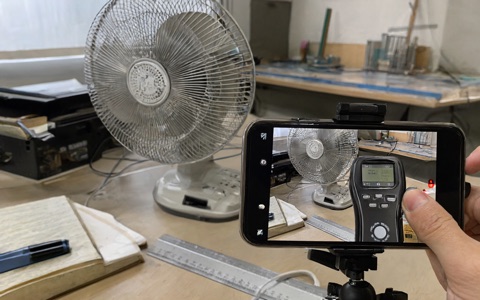
A home EMF meter does three things, and each has a limit that defeats this use case. It measures a field that is present now — it cannot reach back in time to the moment an event, if there was one, occurred. It measures within a fixed set of frequency ranges and field types — a device that pulsed briefly, if it ever existed, is not necessarily in the meter’s range at all. And it reports a level, not an identity — a reading of “something is here” says nothing about what produced it, let alone who directed it.
Those limits are why the professional practice of EMF measurement is built around documentation: repeated readings at the same locations, under the same conditions, with the field type, units, distance, and time of day recorded. A meter is a witness to the present. It is a poor historian, and no amount of beeping changes that.
If your interest in this topic is practical rather than forensic — you have heard odd noises, seen unexplained meter behavior, or want to understand the electromagnetic environment you actually live in — that is the question a measurement-based approach can answer, and it is covered in our guides on what a high EMF meter reading actually means and on directed-energy claims and what measurements can and cannot show.
The honest summary of Havana syndrome, as of this writing, fits in one sentence: the symptoms are real, an acoustic mechanism is scientifically plausible and has physical support in a studied group, most investigated incidents were not attributed to a hostile actor, and the record remains open. Anyone selling certainty on either side of that sentence is selling more than the evidence contains.
Sources
This article draws on the following public documents, named here rather than hyperlinked so that the citations can be pointed at the current official versions:
- National Academies of Sciences, Engineering, and Medicine, report on the adverse health effects experienced by U.S. personnel in Cuba (2020).
- Gage et al., “An Acoustic-Based Mechanism for the Pathogenesis of the ‘Havana Syndrome’ Illness,” Nature Medicine (2021).
- Office of the Director of National Intelligence, report on U.S. personnel adverse health effects (2022), and its updated declassified assessment (2024).
- U.S. Government Accountability Office, report on the federal response to the incidents (2023).
Common questions
Frequently asked questions
That is the question behind most headlines, and the best-supported answer to date is: most of the investigated incidents were not determined to be hostile acts by any particular state. Some incidents showed evidence consistent with a single acoustic (sound-based) source. No investigation has publicly identified a responsible actor for the incidents as a whole, and the symptom clusters remain real and documented.
Yes. Multiple independent reviews found consistent, reproducible symptom clusters among affected personnel, most notably sensations of pressure, auditory disturbances, and cognitive symptoms. The major reviews treat the symptoms as genuine experiences that deserve investigation, not as fabrication. What remains unresolved is the cause, or causes.
It examined a defined group of affected personnel and found biological evidence in the inner ear consistent with acoustic exposure in some cases. That is a finding about a studied group and a plausible mechanism. It is not a conclusion that every affected person was exposed, that a weapon was used, or that an actor can be named. Those are separate questions that separate investigations address.
Generally no, for a historical incident. Household meters measure continuous fields that are present now, within limited frequency ranges, and they identify a level, not a source. An event that may have occurred once, months or years ago, cannot be reconstructed from today's ambient readings. Even a well-run survey documents what is in a space right now, which is a different question from what caused a past incident.
Seek medical care for the symptoms, keep a contemporaneous written record of when and where they occur, and avoid self-diagnosis with consumer meters. The official records consistently point to the value of documented, repeated observation over a single dramatic reading.